
Webcast & Virtual Event Production in New York
Reviewed by Tim Kay, Founder & Director · Updated
Broadcast quality webcasts and virtual events for audiences of any scale. Produced from a controlled space rather than a borrowed conference room, with the registration funnel, the engagement and the archive all inside one scope.
- Studio webcasts, multi platform delivery and live Q and A
- Simulive on the shows where being live adds risk rather than value
- Ten million viewer hours streamed and counting
Audiences who never had to be in the room











Webcast and Virtual Event Production Built for an Audience That Can Leave in One Click
A virtual event has no room. Nobody is committed by having travelled, nobody feels the person beside them paying attention, and nothing at all stops someone closing the tab. Every bit of attention has to be earned rather than assumed.
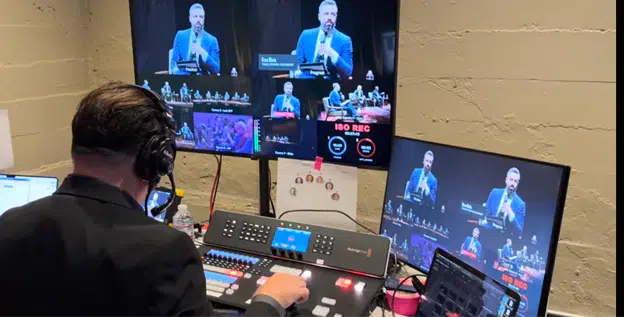
Argus HD produces webcasts the way a broadcast gets produced. Content paced for a screen, a platform that is configured and tested rather than trusted, and somebody whose actual job is the audience for the whole session.
We work from 214 W. 29th St. in Manhattan and produce webcasts from studio spaces, offices and venues across the metro, for audiences anywhere. When the stakes are high, we are the team behind the team.
What We Produce for Virtual Audiences
Everything below sits inside one scope, written in plain language after a technical discovery call. Whatever falls within it, we own end to end.
Studio Webcasts
Produced from a controlled space with proper lighting, audio and a set, rather than a laptop on a conference table with a window directly behind it.
Virtual Conferences and Summits
Multi session, multi track events with their own schedule, speaker management, engagement tooling and an archive that is actually worth keeping.
Product Launches and Announcements
A moment built to be watched live and shared afterwards, with the clips and assets cut and ready before the day is over.
Town Halls and All Hands Webcasts
Leadership speaking to a distributed workforce with clear audio, readable captions and a question queue that genuinely reaches the stage.
Training, Onboarding and Certification
Repeatable sessions with attendance tracking and completion data, produced once properly and reused rather than run live forever.
Panels, Fireside Chats and Interviews
Several remote presenters framed and mixed so a panel still feels like a conversation rather than a grid of squares.
Simulive and Scheduled Playback
Prerecorded content playing to a published schedule with the presenter live in Q and A, which removes most of the risk without losing the interaction.
Live Q and A, Polls and Moderation
Polls, moderated chat and a question queue run by someone whose job is the audience, not a producer doing it between cues.
Recording, Transcript and On Demand
Captioned replays, searchable transcripts and a version ready to post the same day, because most of your views arrive after the event ends.
A Virtual Event Has No Room to Borrow Energy From
The numbers on virtual attendance are widely published and they are sobering. They are also useful, because every one of them is something you can design against.
Around Half Your Registrants Show Up Live
Recent benchmark data drawn from more than a million registrants puts live attendance near 44 to 50 percent of registrations, with roughly 61 percent watching at some point once on demand is counted. Registering is easy. Turning up is the part you have to earn.
Attention Starts Sliding Around Minute 22
That is roughly where drop off begins if nothing changes. Not because the content got worse, but because nothing new happened. A poll, a question, a speaker change or a demo at the right moment is a production decision rather than a nice extra.
Most Views Arrive After the Event
Around 42 percent of webinar views happen on demand. If the replay is not captioned, searchable and posted quickly, you are discarding the larger half of your audience while congratulating yourself on the live number.
Timing Moves the Number More Than Content Does
Published benchmarks put Tuesday ahead for live attendance, with a 2PM Eastern start performing well because it also lands at a workable hour on the West Coast and in Europe. Pick the slot before you build the agenda.
None of this is our data. It is published industry benchmark data, and we raise it because the production choices that follow from it are the ones that actually move your numbers.
The Registration Funnel Is Part of the Production
Most webcast disappointments happen weeks before anyone goes live. If the funnel leaks, the best production in New York is playing to an empty room.

Before the day
- A registration page that loads fast and asks for as little as your team can live with
- A confirmation carrying a calendar file, not just a link buried in an email
- A reminder cadence that actually goes out, including one on the day itself
- Speakers rehearsed on the real platform rather than a similar one
- A dry run of the join experience from outside your own network
- A plan for what a latecomer sees when they arrive twenty minutes in
On the day and after
- Somebody watching the join flow exactly as a new attendee sees it
- Polls timed to the moments where attention normally slips
- A moderated question queue that visibly reaches the stage
- A replay posted quickly, with captions and a searchable transcript
- Attendance, dwell and engagement data handed to your marketing team
- The clips worth sharing cut while the event is still recent
Simulive, and the Honest Case for Not Being Live
Live is not always the right answer, and we would rather say so than sell you a risk you did not need to take.
What Simulive Actually Is
Content recorded in advance and played to a published schedule, with the presenter live in chat and Q and A while it runs. Your audience gets the interaction. The broadcast carries almost none of the risk.
It Removes the Failure Points
A presenter's home connection, a laptop update at the worst possible moment, a demo that behaves differently on the day. None of those can reach your audience if the session is already recorded.
It Solves Time Zones Properly
The same session can play at a sensible local hour in New York, London and Singapore, instead of asking two of the three to join at an hour nobody would choose.
Presenters Get Their Time Back
Recording weeks ahead is far easier to schedule for a busy executive than a fixed live slot, and it means their delivery gets rehearsed rather than merely survived.
Say That It Is Prerecorded
Be transparent about it. Audiences do not mind prerecorded content and they mind a great deal being misled about it. One line in the introduction costs nothing and protects the trust you are building.
When Live Is Still the Right Call
News, results, anything genuinely unfolding, or a session whose entire value is spontaneity. If the moment matters more than the polish, go live and we will build the redundancy to match.
Where Your Webcast Comes From Matters More Than the Platform
Platforms get chosen first and worried about most. In practice the room your presenter is sitting in does more damage than the platform ever will.
A Controlled Space, Not a Conference Room
Proper key light, a background that was chosen rather than inherited, and a camera at eye height. This is the single largest quality jump available to a webcast, and it also happens to be the cheapest one.
Audio Before Anything Else
A dedicated microphone rather than a laptop, a room without a hard echo, and a monitored feed. People forgive a plain picture and they leave over bad sound.
A Wired Connection and a Backup
Hardwired wherever possible, tested at real upload speed, with bonded cellular behind it on anything that matters. Home WiFi is the most common single point of failure in a virtual event.
Remote Presenters Recorded Locally
Every remote presenter records at their own end as a safety, so a connection problem costs you a moment rather than an entire session.
If a presenter genuinely cannot reach a controlled space, we ship a small kit and set them up remotely. It costs a fraction of a session nobody could watch.
Our Production Process
Four stages, one senior team, no handoffs between them. The person who wrote the plan is the person running the show.

Scope and Strategy
Every production starts with a technical discovery call. We map your audience, your platform, your signal path, and whether this event should be live at all.
Platform and Funnel Planning
Registration, reminders, the join experience, engagement tooling and speaker logistics configured and tested end to end, well before show week.
Rehearsal and Execution
Presenters rehearse on the real platform, the failover gets exercised rather than assumed, and a senior team runs the webcast with somebody dedicated to the audience.
Replay and Handover
A captioned replay and searchable transcript posted quickly, engagement data handed to your team, and a short debrief so the next one starts ahead.
What Your Scope Actually Includes
Scopes get vague when a vendor wants room to add charges later. Ours are written to be read by the person approving the budget.

On the day
- A dedicated producer and a stream operator
- Studio or on location origination with proper lighting and audio
- Platform monitoring, with the join experience watched from outside
- A moderator running chat, polls and the question queue
- Remote presenter management on comms throughout
- Live monitoring of the stream exactly as an attendee sees it
Afterwards
- A captioned replay ready to post the same day where scope allows
- Searchable transcript and caption files
- Attendance, dwell and engagement data for your marketing team
- Isolated recordings of every presenter on request
- Short clips cut for social and follow up email
- A written debrief covering what to change next time
Productions Watched From Everywhere
Shows where a visible failure would have become the story. None of them did.
AI Engineer Summit NY
Two days at The Times Center with livestream and a podcast studio running alongside it.
Google Flutter Developer Event
A large scale developer event in Brooklyn with broadcast and global livestream production.
The Ezra Klein Show, Live Distribution
Live podcast production for The New York Times with multi platform distribution.
Board of Directors Meetings
Executive A/V support for private university leadership meetings, with members joining from wherever they were.
What Webcast and Virtual Event Production Costs in New York
Pricing depends on scope, how many presenters and sessions there are, where the content originates and how much of the funnel we are responsible for. A single studio webcast with one presenter and a replay sits at the light end. A multi session virtual conference with simulive playback across time zones sits at the other.
We scope it on a technical discovery call and put it in writing in plain language, so the number you approve is the number you pay.
What moves the number
- How many sessions there are and how many run at once
- Where the content originates, studio or on location or remote
- How many presenters, and how many of them are remote
- Whether we run the registration and reminder flow or your team does
- Live, simulive, or a mix of both across time zones
- Captions, transcripts, translations and clip deliverables
Webcast and Virtual Event Production in New York FAQs
Pricing depends on scope, the number of presenters and sessions, where the content originates and how much of the registration funnel we are responsible for. We scope it on a technical discovery call and put the number in writing before you commit.
In practice a livestream broadcasts an event that is already happening in a room, while a webcast is the event itself, produced for a screen with registration, engagement and a replay built around it. If nobody is travelling anywhere, what you want is a webcast.
Published benchmarks put live attendance around 44 to 50 percent of registrations, with roughly 61 percent watching at some point once on demand viewing is counted. Plan the funnel and the replay around that rather than being surprised by it on the day.
It depends on the content. If it is news, results or something genuinely unfolding, go live. If it is a polished presentation from a busy executive to an audience spread across time zones, simulive gives you the same interaction with far less risk. We will tell you which one your event actually needs.
We think so, yes. Audiences do not mind prerecorded content and they mind a great deal being misled about it. One line in the introduction costs nothing and protects the trust you are working to build.
Yes, and we set them up properly rather than hoping for the best. A wired connection tested at real upload speed, a proper microphone, a lit background and local recording at their end as a safety. Where it helps, we ship a small kit.
Shorter than instinct suggests. Benchmark data puts the start of audience drop off around minute 22, so we design a change of pace before that rather than after it. Polls displayed on screen are also shown to improve completion rates.
Zoom Webinars and Events, Microsoft Teams live events, Webex, YouTube Live, LinkedIn Live, Vimeo, enterprise video platforms and any custom RTMP or SRT destination. If your team already holds a platform contract, we work inside it.
Yes. Registration gating, domain restriction, single sign on protection and unlisted delivery are all normal. Tell us who is allowed to watch and we will match the platform to that.
A captioned replay, a searchable transcript, attendance and engagement data, isolated recordings on request, short clips for follow up, and a written debrief so the next one starts ahead of this one.
Producing something your audience can leave in one click?
Start with a technical discovery call. We will tell you whether it should be live, where it should originate and what the funnel needs to look like, then put a scope in writing you can take straight to your budget holder.
Argus HD // 214 W. 29th St. 2nd Floor, New York, NY 10001 // info@ArgusHD.com