Livestream & Broadcast Production in New York
Redundant, broadcast-grade streams for events where a dropped feed is not an option. We have run a single-take national broadcast live for The New York Times.
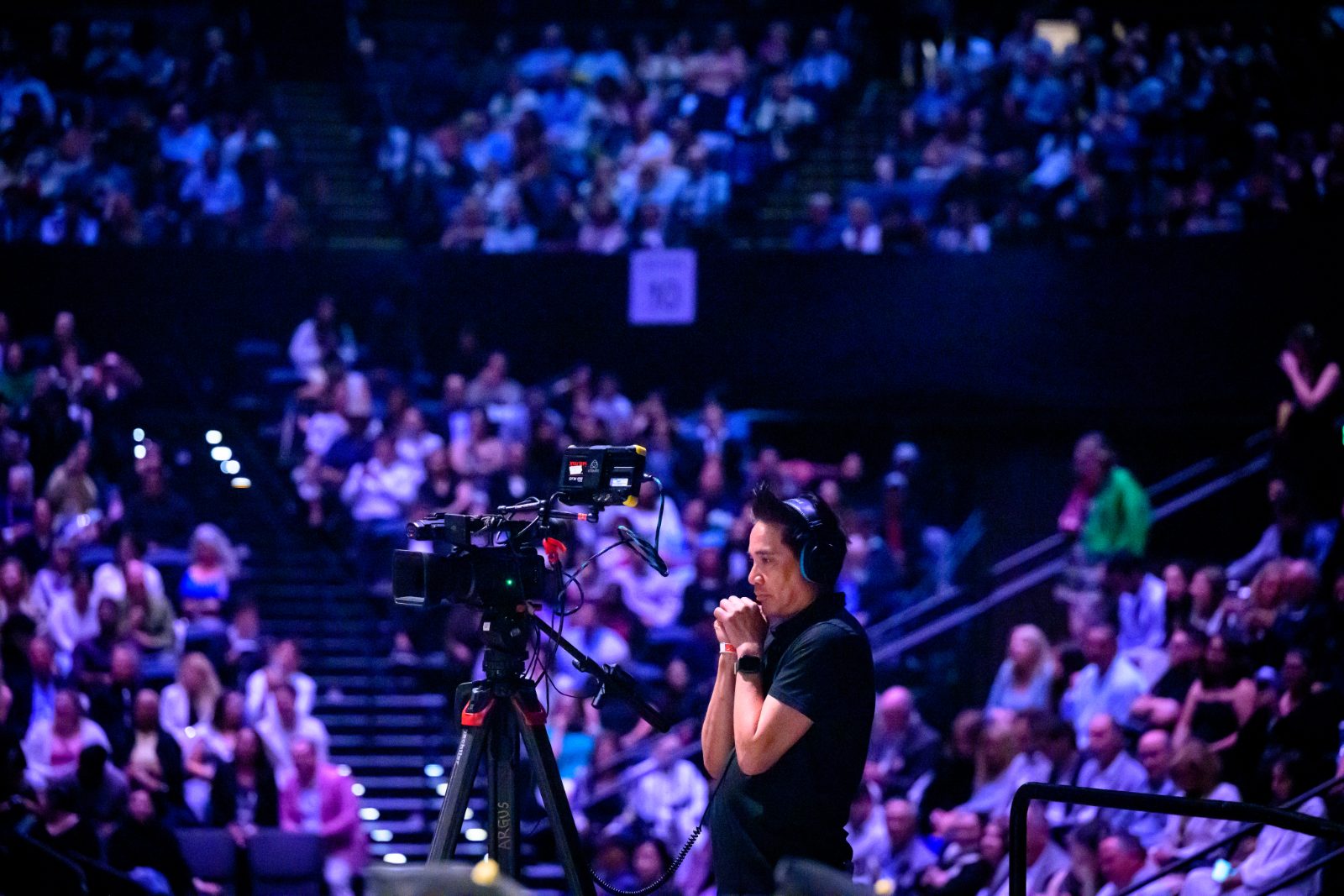
Broadcast reliability, built into the signal path
What a comms lead or event producer gets when the stream simply cannot go down in front of a live audience.
Redundant signal path
Every critical system has a backup, from encoders to bonded cellular uplink, so a single point of failure never reaches your audience.
Multi-platform delivery
One production pushes simultaneously to YouTube, LinkedIn Live, X, Zoom, and Vimeo, so your audience watches wherever they already are.
Broadcast control room on site
A senior crew runs switching, graphics, and two separate audio mixes, one for the room and one for the stream, from a dedicated control area.
Single-take reliability
We rehearse the failure points, not just the show, so the feed works the first time and stays clean from open to close.
A national broadcast, live and in a single take
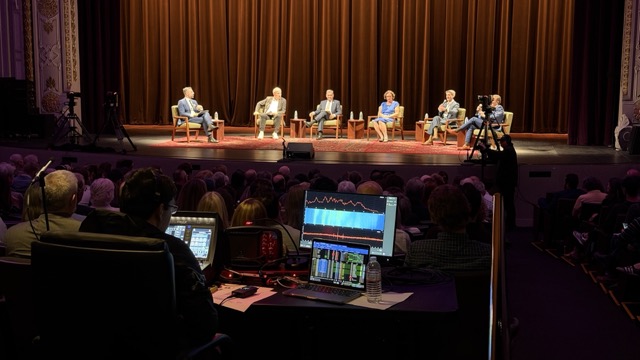
The Ezra Klein Show goes live for the first time
The New York Times took its flagship podcast live for the first time. Five candidates on stage, a sold-out theatre, and a national stream to YouTube, NYT.com, and social running at once, with no rehearsal.
Livestream production in New York, answered
What does livestream production cost in New York?
Livestream production in New York is priced per event after a short scoping call. Cost depends on crew size, camera count, number of platforms, and redundancy level, and you receive a fixed, line-item quote before show day.
Can you stream to multiple platforms at the same time?
Yes. We push a single production simultaneously to YouTube, LinkedIn Live, X, Zoom, Vimeo, and more, managed as one clean feed from our control room.
How do you keep the stream from dropping during a live event?
We build redundancy into every critical system, including backup encoders and bonded cellular uplink, and we identify single points of failure in pre-production so they are removed before you go live.
Do you handle broadcasts at New York venues like the Times Center?
Yes. We produce broadcast-grade streams at Manhattan venues including The New York Times Building and the Times Center, integrating with existing house infrastructure where it makes sense.
How much lead time do you need for a livestream?
Simple single-camera streams can often begin within one to two weeks. Multi-camera broadcasts with redundancy and multi-platform delivery need more lead time for crew, equipment, and run-of-show.